

TSSB lifts emergency order against Apertum – but this is not an acquittal
Austin / 1 August 2025 – According to a decision dated 31 July 2025, the Texas State Securities Board (TSSB) has lifted its emergency order against the Apertum Foundation and the individuals named in connection with it, namely Josip Heit, Dirc Zahlmann, Bruce Innes Wylde Hughes and Dennis Loos.
It is noteworthy that the decision only affects the Apertum Foundation – not DAO1, a project that, according to industry analyses, has links to GSPartners and also raises capital through the tokens APTM and WAPTM.
Legal experts emphasise that the lifting of the injunction does not constitute exoneration in the sense of a judicial finding of innocence. The case remains open in legal terms, and key questions remain unanswered.
Background: Emergency order due to alleged securities fraud
According to the TSSB, the original emergency order of 20 March 2025 accused the parties concerned of offering and selling unregistered securities, acting as unlicensed dealers and making inaccurate or misleading statements.
These allegations were related to the Apertum Foundation’s ‘APTM’ token.
The legal basis was the provisions of the Texas Securities Act, in particular Sections 4003.001, 4004.051 and 4001.058, which contain regulations on registration requirements, fraud and market manipulation.
Revocation with unresolved issues
According to the revocation order, which the parties concerned have agreed to, their representatives argued that
- no securities had been offered,
- no trading activity had taken place,
- and the APTM token was not a security under Texas law.
The TSSB apparently accepted this argument to an extent sufficient for the formal revocation of the emergency order. However, this does not provide a final clarification of the facts.
No acquittal – no final clarification
Lawyers emphasise that the revocation of an emergency order at this stage is a procedural measure and not a judicial decision on guilt or innocence.
The decision replaces the original emergency order but does not contain any finding that there were no violations of the law.
As part of the decision, the parties concerned undertook to comply with securities laws, a course of action that is frequently used in practice to avoid an immediate hearing or further investigations.
Open questions regarding DAO1
According to market observers, it is noteworthy that the decision only affects the Apertum Foundation and not DAO1, a project that, according to industry analyses, has links to GSPartners and also raises capital via the APTM and WAPTM tokens.
Several financial supervisory authorities – including those in Australia and New Zealand – have publicly warned against DAO1. These warnings are an indication that international concerns remain.
DAO1 states that it does not offer its services to US citizens. However, experts point out that geographical access restrictions can be circumvented technically, which makes it difficult to independently verify such claims.

Assessment
According to lawyers and regulatory experts, anyone who concludes from the lifting of the Texas emergency order that DAO1 or similar projects are legally unobjectionable is misjudging the situation.
The TSSB decision is not based on an acquittal after hearing evidence, but on a procedural assessment prior to a possible hearing.
Continuation: GSPartners hearing in November
At the same time, the GSPartners / G999 case remains on the TSSB’s agenda.
The hearing already scheduled for alleged securities fraud is set for 3 to 6 November 2025.
This case could result in one of the first court rulings on a business model that, according to critics, has structural parallels to projects such as Apertum and DAO1.

Conclusion
From a legal perspective, the lifting of the Texas injunction against the Apertum Foundation is not an acquittal, but a tactical move in the run-up to a possible escalation.
For investors, this means that a thorough legal review of each individual project, token or programme remains necessary, especially when terms such as ‘blockchain’ or ‘decentralisation’ are used to argue that regulatory requirements have been circumvented.
Note: This article is intended solely for information, journalistic analysis and independent opinion-forming within the meaning of Article 5 of the German Basic Law and Section 51 of the German Copyright Act (UrhG). (right to quote). All information is based on publicly available sources, official announcements and careful editorial research. Despite the utmost care, we do not guarantee the accuracy, completeness or timeliness of the information contained herein.
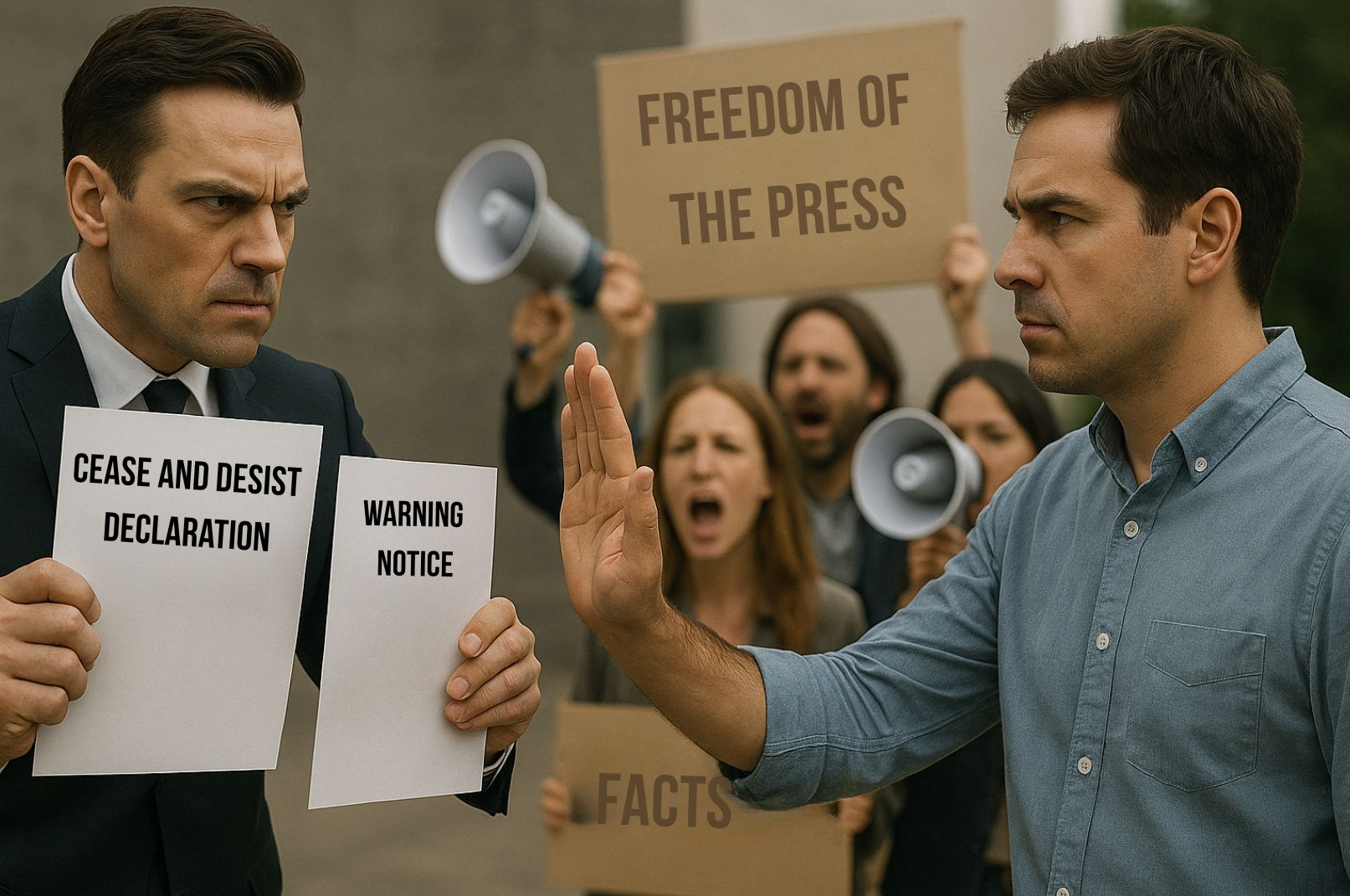
Companies, individuals or projects are mentioned on the basis of verifiable research and clearly identified expressions of opinion. This publication is protected by the constitutionally guaranteed freedom of the press. Contributing sources are subject to editorial source protection in accordance with journalistic standards.
Sources:
Coin World (AInvest):
Morningstar+9AInvest+9AInvest+9
Cointelegraph (via Chainwire):
Texas State Securities Board+15Cointelegraph+15The Crypto Times+15
CryptoTimes:
Cointelegraph+4The Crypto Times+4Whiteford Law+4
Texas State Securities Board (TSSB), Emergency Cease and Desist Order ENF‑25‑CDO‑1889
Texas State Securities Board (TSSB), Order ENF-25-CDO-1891.pdf
Texas State Securities Act (Tex. Rev. Civ. Stat. Ann. art. 581-1 et seq.)
→ Legal basis for the violations cited in the order.
TSSB announcements and tweets from Joe Rotunda, Enforcement Director of the TSSB
→ Official announcement of the hearing dates in Docket No. 312-25-16274.
Previous TSSB orders regarding GSB Gold Standard Bank and GSPartners
→ Context of the parallels to previously prohibited business models addressed in the current order.








Leave a Reply
Want to join the discussion?Feel free to contribute!