
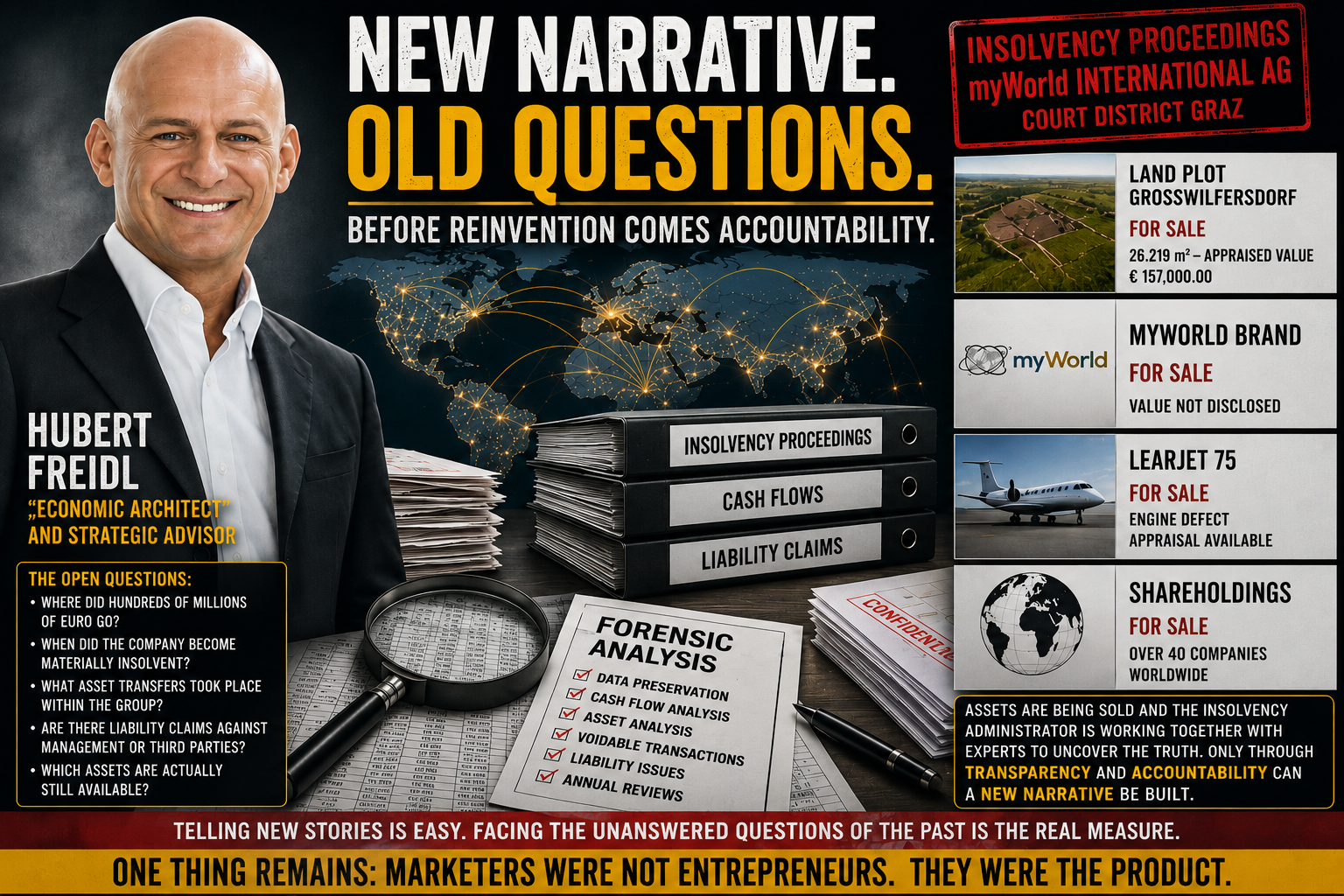
From dream salesman to business architect? – The past cannot be renamed.
Hubert Freidl’s current self-portrayal as an “economic architect” and strategic consultant seems more than just disconcerting in light of the past 20 years. This is especially true when one considers that hundreds of thousands of marketers generated hundreds of millions of euros through his systems Lyoness, Lyconet, and later myWorld , without any transparent and verifiable proof of how these funds were actually used to this day.
This analysis has not yet been provided with the necessary clarity to insolvency administrators, authorities, public prosecutors, or the affected marketers themselves. It is all the more striking, therefore, that not a word is said on today’s platforms about those business models that were once presented as revolutionary and without alternative.
Instead, a new narrative emerges: that of the visionary entrepreneur who “gave it his all” and now works in an advisory capacity. What is consistently ignored in this narrative is the structure of the original model.
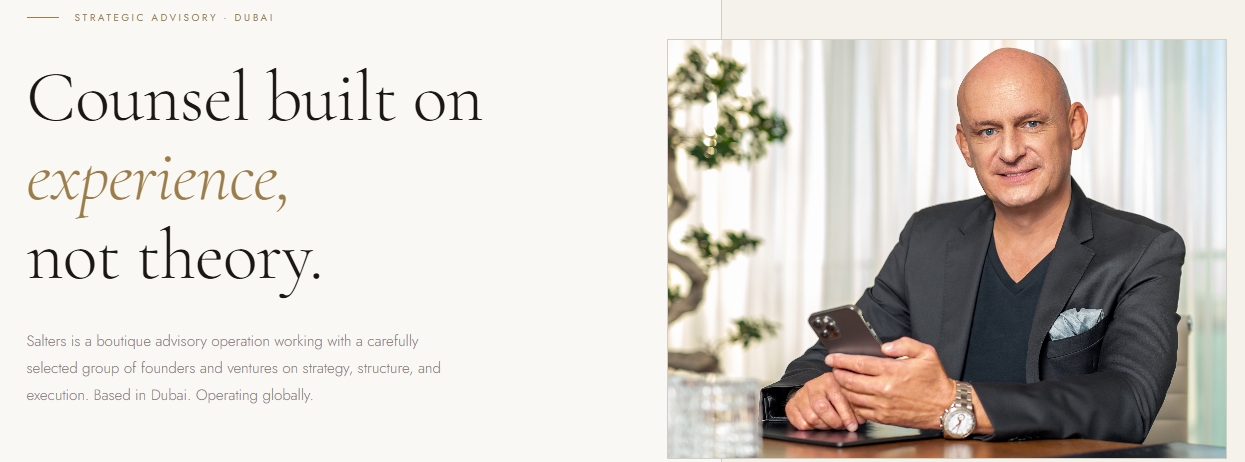
On the Salters website (salters.com), Hubert Freidl is presented as a strategic consultant and business architect. The international experience advertised there clearly stems from the Lyoness, Lyconet, and myWorld complex. It is all the more remarkable, then, that these names are barely mentioned, while the investigation into their fate continues to this day.
The dream of entrepreneurship was being sold. People talked about financial freedom, about being their own boss. Many believed they would build a real business.
However, for many of those affected, the reality was different.
You didn’t have your own business. You were the most important customer of a system designed to take your money. You paid for entry, for products, for training, for events, and to maintain your status.
And at the same time, you were told that you would be successful if you passed on the “chance”.
You shouldn’t sell a product, but a dream. The crucial factor wasn’t sales, but recruitment. Friends, family, and your personal network became your downline ; even close relationships transformed into potential sources of income.
The entire model was based on the narrative that everyone could win. But that was mathematically impossible. Money didn’t come from nothing. The money earned by a few at the top ultimately came from those at the bottom who paid in, consumed, and hoped. While many waited for the promised success, they continued to pay in, thus financing the system above them.
You weren’t investing in real assets. You were investing in a package and in the hope that the next person below you would sign up.

And today?
Today, a new narrative is being told. Without a comprehensive investigation. Without genuine transparency. Without clear answers about what happened to the funds collected over the years.
This is precisely the crucial point:
Before reinventing oneself and staging oneself as a consultant or “architect” of economic models, it would be appropriate to first thoroughly examine one’s own past. To take responsibility. To create transparency. And to stand by what one once called one’s “baby”—Lyoness, Lyconet, and myWorld .
Telling new stories is easy.
Confronting the open questions of the past is the true measure.
Because one thing remains:
Marketers weren’t entrepreneurs. They were the product.
Note:
This article is a commentary. It contains the author’s opinions, assessments, and conclusions based on publicly available information and personal research. The presumption of innocence applies to all individuals mentioned. Ongoing investigations and insolvency proceedings are not yet legally concluded.






Leave a Reply
Want to join the discussion?Feel free to contribute!