
ZENIQ, LayerK & the Great Downgrade?
Dispute over LYK Payouts in the ZENIQ Swap: How original token promises are being devalued
Victims from the Safir / ZENIQ community accuse Homnifi / LayerK and their DAO of breaking their original promises. Initially, ZENIQ holders could convert their tokens into the platform’s internal sLYK token and stake them in the WALLEK wallet for roughly two years. According to the complainants, those locked sLYK were to be paid out after the term in LYK-W (withdrawable LayerK tokens). In a recent DAO proposal, a community member protested that this agreement was unilaterally altered: instead of receiving LYK-W as promised, holders now get sLYK back and must follow a convoluted conversion path to obtain actual LYK-W. The new mLYK currency—whose exchange rate to sLYK has been set at 1 : 0.15 -is effectively being made mandatory, which represents a substantial haircut in value.
Background: from ZENIQ token to LayerK
Conversion and lock-up: Under the original offering, ZENIQ tokens were converted into the LayerK ecosystem, for example at a fixed rate (e.g. 1 ZENIQ = 0.05 sLYK). Users received sLYK and could lock those tokens in Wallek, Homnifi’s wallet product. The lock-up period was intended to be about two years, followed by a staggered payout.
Payout promise: According to the communications at the time, savers would receive LYK-W after the lock-up—a withdrawable LayerK token that could be transferred externally. This payout promise was a central incentive for many ZENIQ investors to accept the lengthy lock-up.
Vesting phase: After the lock-up, a further phased vesting period was supposed to distribute LYK-W over months or years. In the meantime, users would retain the locked sLYK and purportedly participate in the Homnifi network’s growth.
“As we converted our ZENIQ into sLYK and locked them for two years, we did so because we were promised LYK-W,” said one affected participant.
New DAO rules and their consequences
In recent months, the Homnifi / LayerK DAO approved several changes that effectively overturn the original agreement:

Release of all Wallek stakes: On 8 October 2025, Homnifi announced that all tokens linked in Wallek would be released—meaning both LYK and sLYK could be unlocked early. Contrary to expectations, unlocked sLYK are not automatically converted into LYK-W; users receive sLYK instead. Those sLYK are then subject to a new 500-day vesting schedule, with daily distributions to the user.
New conversion system: An internal conversion function was introduced: sLYK can be swapped within the ecosystem into other internal values (e.g. HMF- or USDK-promo values) and soon into mLYK. The fixed conversion rate is 1 sLYK = 0.15 mLYK. A later conversion from mLYK to LYK-W is possible (1 mLYK = 1 LYK-W, per the FAQ), but that two-step route plus prolonged additional lock-ups results in significant value erosion for holders.
Removal of direct withdrawals: Wallek-related announcements state that direct sLYK withdrawals are not currently permitted. Instead, users are steered toward the described internal conversion paths. Only after following these routes can a user potentially obtain LYK-W—and for former ZENIQ participants this would come with the steep 0.15 haircut.
Taken together, these changes mean that users who converted ZENIQ to sLYK and fulfilled the agreed lock-up no longer receive the originally promised LYK-W. To obtain LYK-W today they must convert via mLYK—effectively receiving only 15% of the intended payout and accepting further multi-year lock periods (for example via minting or linking in NodeK / CloudK).
Demands from within the ZENIQ community
A community member filed a petition in the LayerK DAO. The key points:
“Honor the original promise”: After the originally agreed lock-up (~2 years) and its vesting phase, affected users should receive their tokens in LYK-W, as originally communicated. If claims must technically be processed initially as sLYK, those sLYK should be automatically converted 1:1 into LYK-W, without applying the 1 : 0.15 factor—or imposing additional multi-year lockups.
Special-case treatment: The ZENIQ staking positions were entered under different terms (with LYK-W payout). Therefore the new sLYK→mLYK exchange factor must not be applied retroactively to these legacy positions; they should be exempt from the DAO’s retrofit.
Rationale: The petition frames the issue as one of trust and fairness. Early ZENIQ backers accepted long lock-ups based on clear payout promises. A retroactive worsening of terms is a breach of that trust and would cause many participants to lose confidence in the project.
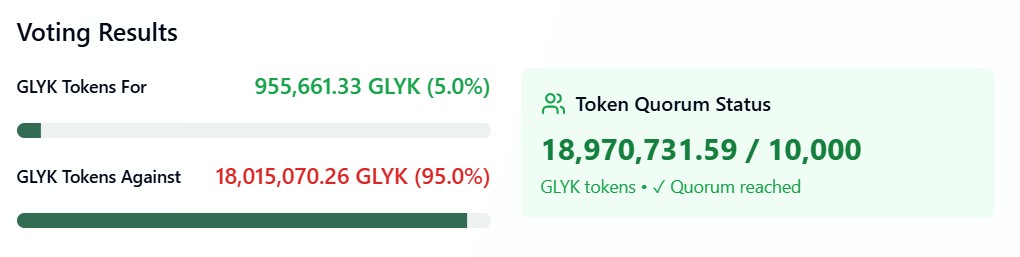
Voting outcome: In the online vote, only 5% (≈0.96 million GLYK) supported the petition, whereas 95% (≈18.0 million GLYK) opposed it; quorum was reached. That means the DAO—where governance token holders decide—rejected the request. The result implies that institutional or large token holders (or parties not aligned with ZENIQ claimants) carried the vote.
Homnifi & LayerK: Criticism and warning signs
The change of terms has provoked strong criticism and fits into a wider pattern that warrants close scrutiny:
Regulatory warnings: In May 2025 the New Zealand Financial Markets Authority (FMA) issued warnings regarding Homnifi as part of the XPro ecosystem, noting that Homnifi offered “crypto wallet services” without registration or a license to provide financial services. Such official alerts indicate regulatory concern.
A Matryoshka-like token architecture: Observers describe Homnifi / LayerK’s setup as a nested “Matryoshka” of internal tokens and contractual layers. User communications are flooded with technical terms (USDK, mLYK, sLYK, cLFI…) whose real intrinsic value is often unclear. Many affected users report that new tokens are constantly introduced while older ones are deprecated—leaving holders uncertain about what they actually own.
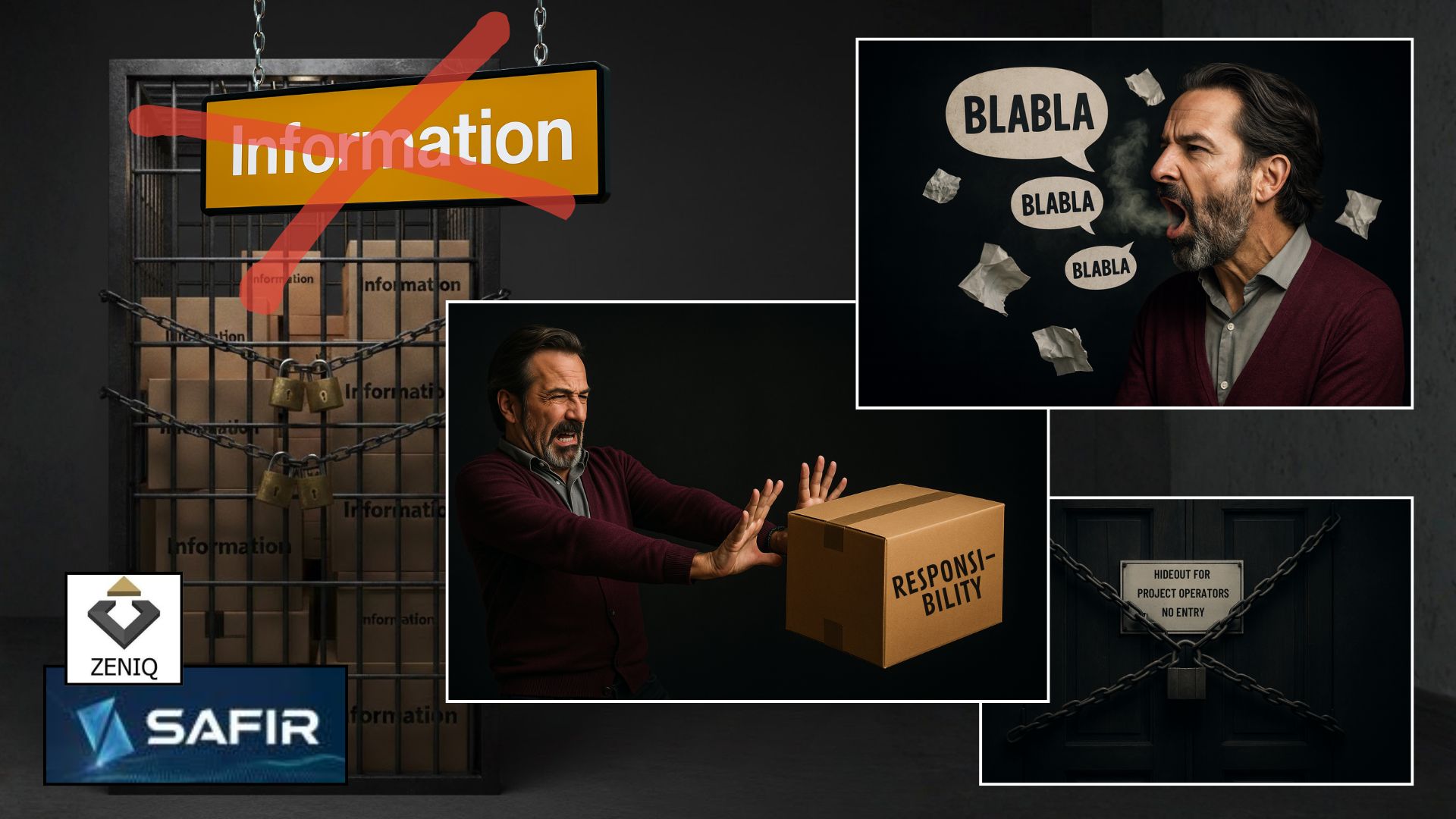
Internal lock-in mechanisms: By restricting direct sLYK withdrawals, the system increasingly forces users to remain within the ecosystem through successive conversions. The Homnifi Wiki explicitly recommends converting and re-engaging with the network—an approach critics interpret as a deliberate retention strategy: lure users with generous payouts, then change the rules once significant capital is inside.
Heightened Ponzi suspicions: The interplay of new token schemes, extended lock-ups and mandatory conversion paths has amplified suspicion of pyramid-like dynamics. BEKM summarizes the concern: Homnifi / LayerK seem to create “a cycle in which money from new investors is used to satisfy old claims.” Although a legal determination of Ponzi activity has not been made, frequent rebrands (from Safir/ZENIQ to XERA.pro to Homnifi) and suspension of payouts strengthen that suspicion.
Opaque corporate and contractual structures: Analysts also criticize how opaque the entities behind LayerK / Homnifi are. Multiple brands (Homnifi, NodeK, CloudK, etc.) are traced back to a single shell company (LayerK Group LTD in the BVI), and terms of service are disparate on paper but lack substantive clarity in practice. Users are rarely told plainly who controls the funds; enforcing “terms and conditions” without formal, signed agreements presents clear legal risk.
Our Conclusion
This case is symptomatic of the deeper problems surrounding Homnifi / LayerK: what is promoted as an innovative Web3 platform increasingly rests, in critics’ eyes, on intransparent economic designs that strongly resemble previously criticized structures. Early ZENIQ investors—who staked substantial sums hoping for LYK-W payouts—now find themselves confronted with DAO decisions that reduce the value of their claims.
Even if Homnifi justifies the changes as necessary for “platform stability,” the erosion of trust is considerable. The payouts that users end up receiving (sLYK, and only modest LYK-W after an expensive conversion path) starkly contradict the original terms they accepted. The recommendation is clear: without firm, contractual commitments and transparent payout rules, investors face a real risk of being unable to recover their deposits.
Note:
This article is based on publicly available sources, documented user reports and editorial analysis. It is intended to inform the public and falls under the freedom of the press and freedom of expression in accordance with Art. 5 GG, Art. 10 ECHR and Art. 85 GDPR.
Facts and opinions have been carefully separated and labelled accordingly.
Sources
- LayerK Telegram Group
- LayerK DAO – Decentralized Governance Platform (Zugriff: 08.12.2025)







Leave a Reply
Want to join the discussion?Feel free to contribute!