

‘Deletion request instead of clarification – Hubert Freidl wants to make his public image disappear’
A request that reveals more about its sender than about freedom of the press
The editorial team at BEKM.eu received a letter from Hubert Freidl, the founder and long-time head behind the corporate structures of Lyoness, Lyconet and myWorld. In his letter, Freidl demanded the complete removal of all content about him from the domains bekm.eu, bekm.us and bekm.it – including his name, pictures, information about his assets, business connections and quotes from public sources.
He refers to Articles 6, 16 and 17 of the General Data Protection Regulation (GDPR) and argues that there has been ‘unlawful data processing’ because he did not give his consent to the publication of his personal data. Furthermore, he claims that the portrayal of him is ‘false, misleading and damaging to his reputation’. Freidl demands the deletion of his data from all systems, including caches, backups and archived versions, and threatens to file complaints with data protection authorities and take legal action if his demands are not met.
Our response: Freedom of the press also applies to uncomfortable truths
The editorial team at BEKM.eu reviewed the request and rejected it, citing journalistic media privilege (Art. 85 GDPR), freedom of the press under Art. 5 GG and freedom of information under Art. 10 ECHR.
The content was published on the basis of publicly accessible register extracts, court documents and Freidl’s own previous official communications, such as on websites and presentations operated by him, in which he publicly presented himself as an entrepreneur, investor and ‘visionary of the cashback system’.
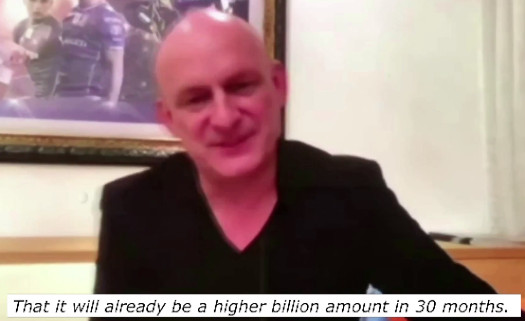
As a public figure, Hubert Freidl has not only been the subject of media attention for decades, but has also been the creator of his own media presence. Until a few years ago, he ran his own website, on which he presented himself as a ‘self-made millionaire’ and stated his private fortune to be 500 million US dollars. The fact that he is now demanding the deletion of the same publicly available information that he himself once communicated is contradictory, to say the least – and difficult to understand from a journalistic point of view.

Between the right to information and the politics of memory
The so-called ‘right to be forgotten’ under Article 17 of the GDPR does not apply without restriction. It finds its limits where information is part of public discourse or contributes to the formation of opinion.
The European Court of Human Rights (ECHR) and the Federal Constitutional Court have repeatedly emphasised that, in the case of persons who have entered the public eye through their actions, the public’s interest in information takes precedence – especially when it comes to economic or social processes with significant implications.
Freidl was and is a central figure in a system that has been investigated by authorities and judged by courts in several countries. Reporting on these facts is not only permissible, but necessary in the interests of an informed public.
An attempt to protect one’s image through legal threats
In journalistic practice, requests for deletion and cease-and-desist orders from public figures are not a new phenomenon. But in the case of Hubert Freidl, the move seems like an attempt to revise the public’s memory of his own business history and thus rewrite the narrative.
The fact that someone who has actively sought visibility for years in marketing videos, glossy brochures and public appearances is now insisting on data protection reveals a remarkable double standard.
Freidl has made media self-promotion one of his central tools. Today, as public perception has changed, that same visibility has suddenly become a problem that needs to be deleted.

Editorial comment
We would like to point out that the journalistic reporting on Hubert Freidl and his business environment is based on verifiable facts, public sources and the legitimate interests of the general public. The request to have critical but factual reports removed under the pretext of data protection is not a legitimate act of self-determination, but an infringement of press freedom.
The fact that Mr Freidl complains about the publication of his own pictures and previous statements, while he himself once proudly flaunted his private fortune of 500 million US dollars, can be described, both journalistically and humanly, as self-contradictory and, to put it politely, remarkably comical.
Freedom of the press does not mean that one can write about anyone, but it expressly protects the right to report on those who have placed themselves in the public eye. Mr Freidl was and is such a person.
Legal notice
This article is based on journalistic analysis and is protected by freedom of the press and freedom of expression under Article 5 of the German Basic Law and Article 10 of the ECHR.
It serves the purpose of public information and does not constitute a final legal assessment.
Hubert Freidl was expressly invited in the counterstatement to provide evidence of verifiable inaccuracies or to submit his own statement.
Sources:
- Original letter from Hubert Freidl to BEKM.eu, 2025-11
- Statement from BE-Konfliktmanagement / BE-EWIV, 2025-11
- Archived version of freidl.com, screenshot, archive reference stored by the editorial team.
- Company register extracts myWorld International AG, Vienna; Lyoness Europe AG, Graz
- Public media reports: Puls24, Trend, Der Standard, Tiroler Zeitung, KSV1870, archives
- Own research and archived versions of freidl.com (2015–2025)








Leave a Reply
Want to join the discussion?Feel free to contribute!