
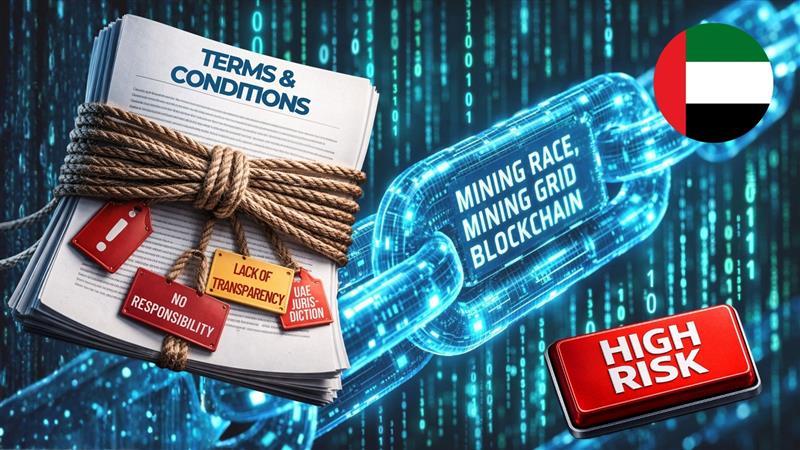
MINING GRID/MINING RACE: Blockchain visible, business model transparent!
Terms and conditions shift almost every conceivable risk!
After the publication of our article on Mining Race / Mining Grid, a commentator using the name ‘MinerX’ posted a clear criticism. The accusation: poor research, lack of expertise, unsubstantiated claims. Positive online reviews, personal impressions from Dubai, functioning apps and traceable payments on the blockchain are cited as counterarguments.
This line of argument is not new; rather, it is typical of many crypto and cloud mining models that have collapsed in recent years. That is precisely why a sober assessment is worthwhile.
Visible payouts do not refute structural risk
(
The fact that payouts are made or can be traced on the blockchain is no proof of the sustainability or seriousness of a business model.
The history of crypto Ponzi schemes is full of examples where:
- payments were made for years,
- apps worked,
- transactions were visible on the blockchain –
- until the system collapsed.
Mining Grid’s terms and conditions also expressly confirm that no guarantee of profitability, continuous operation or returns is given. Returns may therefore occur – but they do not have to. This is precisely where the risk lies.

‘On site in Dubai’ is no substitute for disclosure
The claim that the company was discovered ‘on site in Dubai’ is journalistically irrelevant as long as there are no verifiable documents:
- no annual financial statements,
- no energy or hosting contracts,
- no independent confirmation of the mining locations,
- no economic allocation of the hardware.
The terms and conditions also remain conspicuously vague. They allow the operator to:
- relocate mining sites at any time,
- interrupt operations without compensation,
- retain or utilise hardware in the event of payment arrears.
Transparency looks different!

Place of jurisdiction UAE
Exclusive jurisdiction of the United Arab Emirates, without alternative dispute resolution. This is effectively a considerable hurdle for European customers.
These points are not opinions, but can be derived verbatim from the terms and conditions.
The terms and conditions confirm key points of criticism
The commentator accuses the author of ‘constructing questionable connections’. However, a glance at the terms and conditions shows that key points of criticism are not speculative, but are substantiated in the text:
Complete risk transfer to the customer
Services are provided ‘as is’, without any guarantee of function, yield or availability.
Advance payments, hardly any refunds
Licences and fees are generally non-refundable. Even in the event of service disruptions, there is no entitlement to a refund.
Termination if lawyers are involved
The terms and conditions allow for termination of the contract if the customer prepares legal action – a remarkable passage.
Place of jurisdiction UAE
These points are not opinions, but can be derived verbatim from the terms and conditions.
‘No investment’ – but an investment-like structure
Mining Grid emphasises in its terms and conditions that it does not offer investments or securities. At the same time, the model is based on:
- Advance payments,
- Ongoing fees,
- Profit sharing,
- Return narratives.
However, whether something is an investment in regulatory terms is determined not by its self-designation, but by the economic reality. This, too, is legitimate to question from a journalistic point of view.
Questions remain unanswered – despite criticism
MinerX accuses the company of leaving ‘fundamental questions unanswered’. That is precisely the point. These questions were asked before publication and remained unanswered. They include, among others:
- Where exactly is mining taking place?
- Who owns the assets economically?
- How is the hashrate per customer calculated?
- How is it ensured that payouts are not made from new funds?
- Why are there no auditable financial statements?

Journalism is not about reproducing advertising claims, but about asking questions where transparency ends.
Conclusion
MinerX’s criticism is no substitute for a substantive examination of the documented risks. Positive experiences of individuals, visible transactions or personal impressions are no counter-evidence to structural, contractually fixed risk asymmetries.
As long as a business model:
- leaves maximum control with the provider,
- shifts almost all risks to customers,
- limits transparency to formal statements,
- and makes legal enforcement difficult,
critical reporting is not only permissible but necessary.
Note
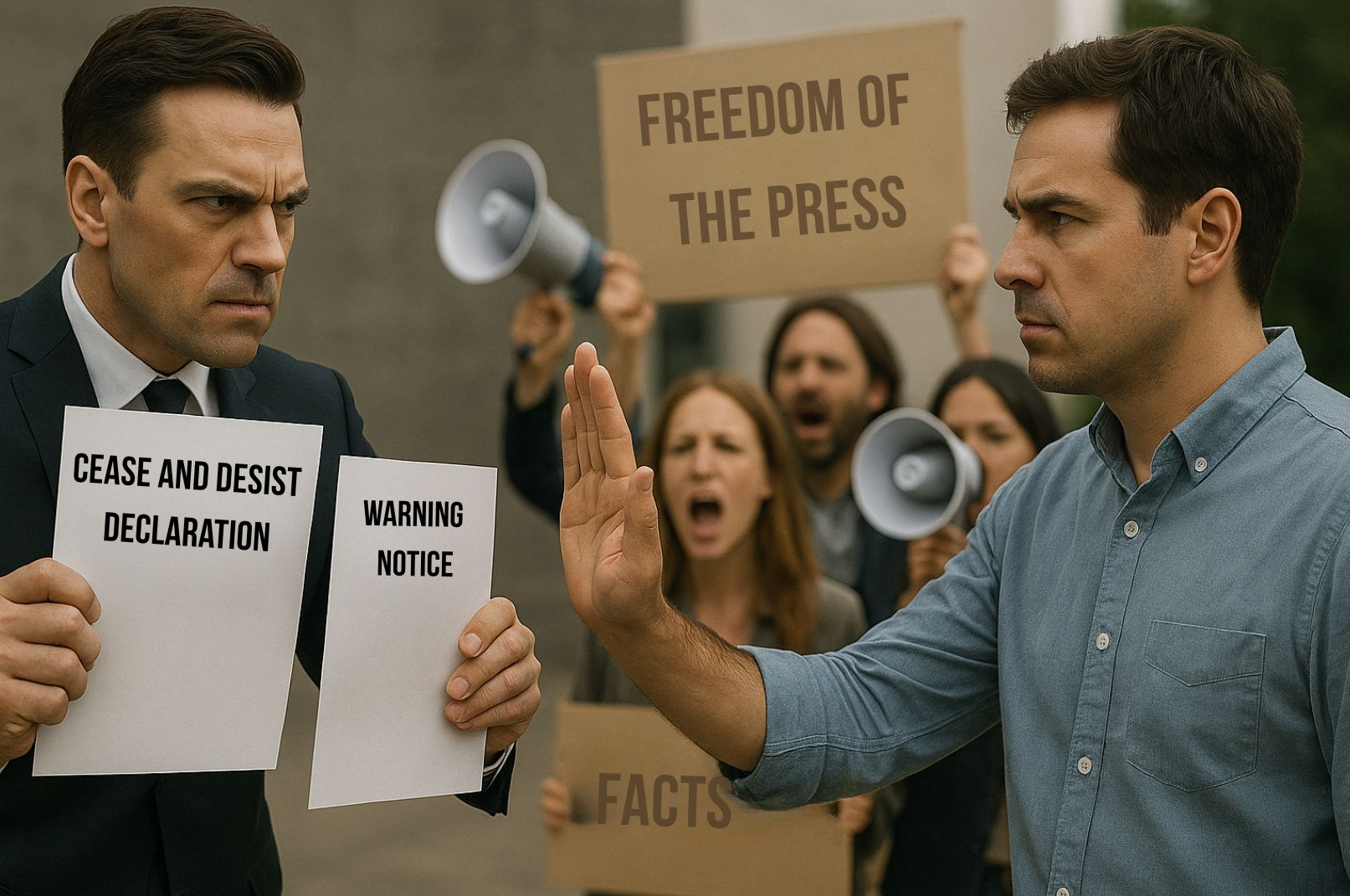
As already offered on several occasions, the company is welcome to comment on the outstanding issues at any time or to submit verifiable documents. Until then, this remains a permissible, fact-based analysis of suspicions and risks within the meaning of Article 5 of the German Basic Law and Article 10 of the ECHR.
Sources include:
anwalt.de – Consumer law classification
Mining Race – legal risks and experiences
Legal assessment of mining licence models, advance payments and lack of regulation.
Reddit – r/Finance (public user reports)
Mining Grid / Mining Race – critical discussion
Experience reports on payouts, transparency and contractual risks.
Trustpilot – user reviews
MiningGrid
Mixed reviews make it clear that positive individual reports are not proof of reliability.

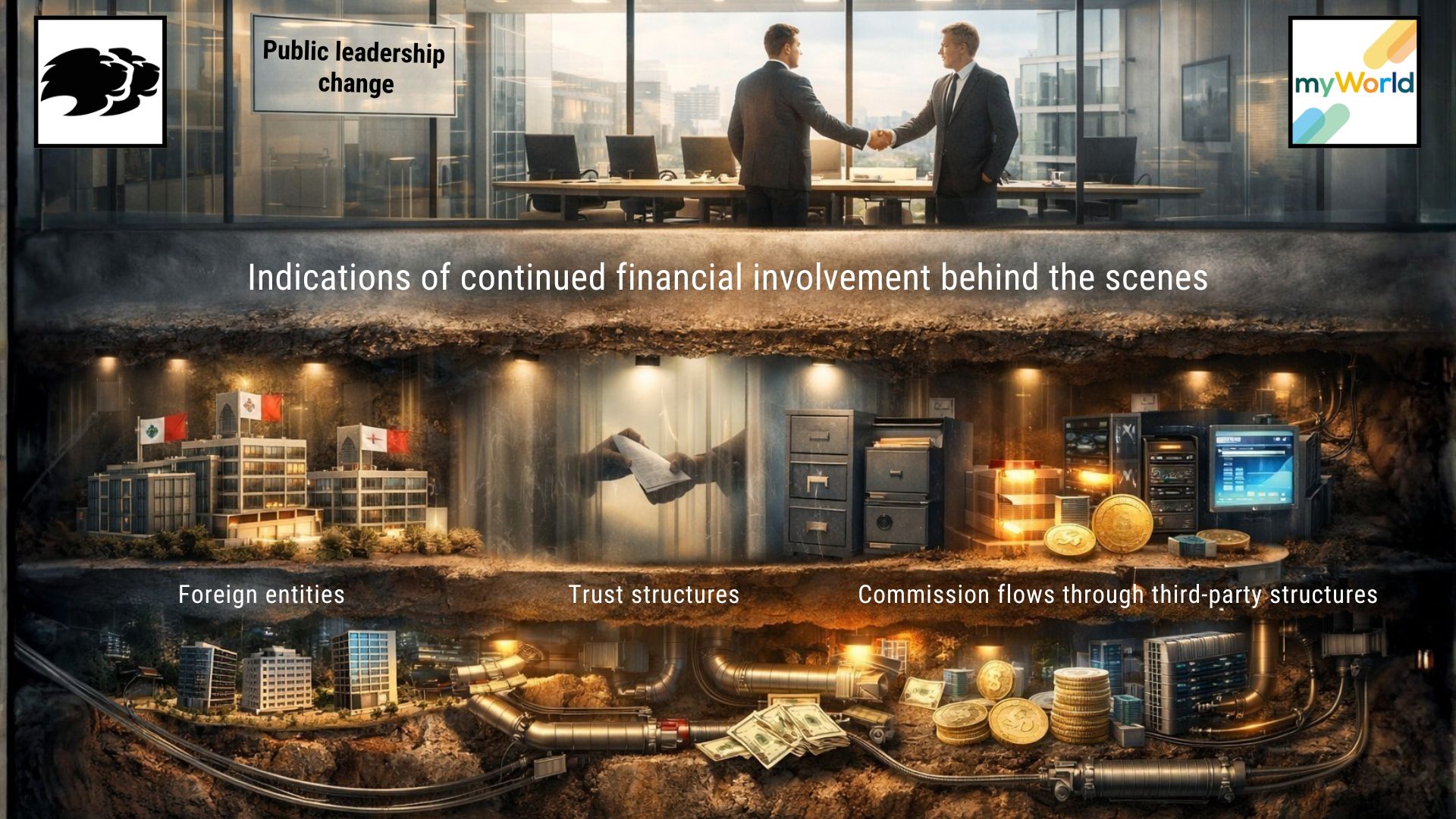



This is something I´ve been trying to do a bit of reasearch on, this whole Mining Grid / Mining Race -thing. Why? Somebody I care about has been lured into this, and now they are luring many other people to join as well. To me it never feels right, something always feels very much ´off´.
There are so many red flags in this project, I can´t even begin to count. Just recently I discovered one of their marketing materials, in Facebook, in Mining RACE – Community -page. It´s been posted in January the 9th, 8:35. In the post it says that when and where it comes to mining Bitcoin, “…you can avoid volatility and start mining with Mining Race, powered by ICONX.” What they are basically saying is that all the normal riskS of mining and investing in Bitcoin can be avoided just by using their app.
Don´t they say that someone promising a risk-free investment is always a big red flag, one of the most rudimentary ones? How can they promise risk-free and even fixed returns if they don´t come from somewhat reliable sources, such as from new investors?
I happen to know that at least here in Finland, there are same people involved as active marketeers as there were in Onecoin. There are too many warning signs. I know many people now who have joined. I fear this is going to break friendships and even family bonds.
Responses to the Questions
Where exactly is mining taking place?
Mining Grid operates its mining infrastructure through privately contracted data-center facilities located in jurisdictions where industrial-scale Bitcoin mining is legally permitted and economically viable.
For security, competitive, and operational-risk reasons, exact facility locations are not publicly disclosed. This practice is common among private, non-public mining operators and is not indicative of non-existence or impropriety.
⸻
Who owns the assets economically?
The mining hardware and infrastructure are economically owned and controlled by Mining Grid and its affiliated operating entities.
Customers do not acquire ownership rights over physical mining equipment. Instead, they enter into a contractual arrangement granting them a proportional right to mining rewards generated by the company’s operational hashrate, as defined by the terms of service.
⸻
How is the hashrate per customer calculated?
Customer hashrate allocations are determined contractually based on the mining plan selected. Each plan corresponds to a defined portion of Mining Grid’s total operational hashrate.
Payouts are calculated proportionally from actual mining output, net of operational costs, rather than from simulated or fixed-return models.
⸻
How is it ensured that payouts are not made from new funds?
Payouts are made directly from Mining Grid’s mining wallets, not from customer deposits.
The wallet referenced below publicly shows consistent inbound mining rewards from major pools such as AntPool and F2Pool, averaging approximately 5 BTC per day, which corresponds to active mining output rather than customer inflows:
Because payouts originate from mining-reward inflows, they are structurally separated from new customer funds. This can be independently verified on-chain.
⸻
Why are there no auditable financial statements?
Mining Grid is a non-KYC, privately held company and is not publicly listed, does not solicit regulated investment products, and does not operate under jurisdictions requiring public financial disclosure or third-party audits.
As such, it is not legally obligated to publish audited financial statements. The absence of audits reflects the company’s private operational model, not a regulatory breach.
⸻
On Transparency and Risk
Journalism appropriately focuses on areas where transparency ends. However, it is important to distinguish between structural risk and fraud allegations.
Mining Grid’s model does involve:
• Centralized operational control,
• Contractual rather than ownership-based customer participation,
• Limited disclosure consistent with private, non-KYC operations,
• Cross-border legal complexity.
These characteristics introduce asymmetric risk, which is openly inherent to private cloud-mining arrangements. They do not, by themselves, constitute evidence of misrepresentation, Ponzi mechanics, or absence of mining activity—particularly when on-chain mining revenue is publicly verifiable.
⸻
Conclusion
Criticism based solely on structural asymmetry or limited transparency does not replace substantive analysis of:
• Verifiable mining revenue,
• On-chain payout sources,
• Contractual clarity,
• Operational consistency.
While customers must assess risk tolerance carefully, visible blockchain data, documented mining inflows, and contract-based payout mechanisms provide materially relevant evidence that payouts are derived from mining activity rather than from new participants.
Structural risk should be acknowledged — but it should not be conflated with proof of misconduct or Ponzi because its not.
The article you mentioned made no claims of proof, alleged no fraud, and did not claim or imply a Ponzi scheme.
The article contains solely a journalistic analysis of the publicly recognizable structure of a cloud mining model. It identifies limitations in transparency, contractual asymmetries, and a lack of external auditability as risk factors—not as proof of wrongdoing.
The article neither denied nor disputed the existence of mining activities. Accordingly, it made no claims that payouts would be made from new customer funds.
Your statements and the wallet evidence you cited represent supplementary self-presentation. They do not alter the fact that the article contains no claims of proof, but rather a permissible, clearly labeled analysis.
The article does not equate structural risk with fraud or a Ponzi scheme.