
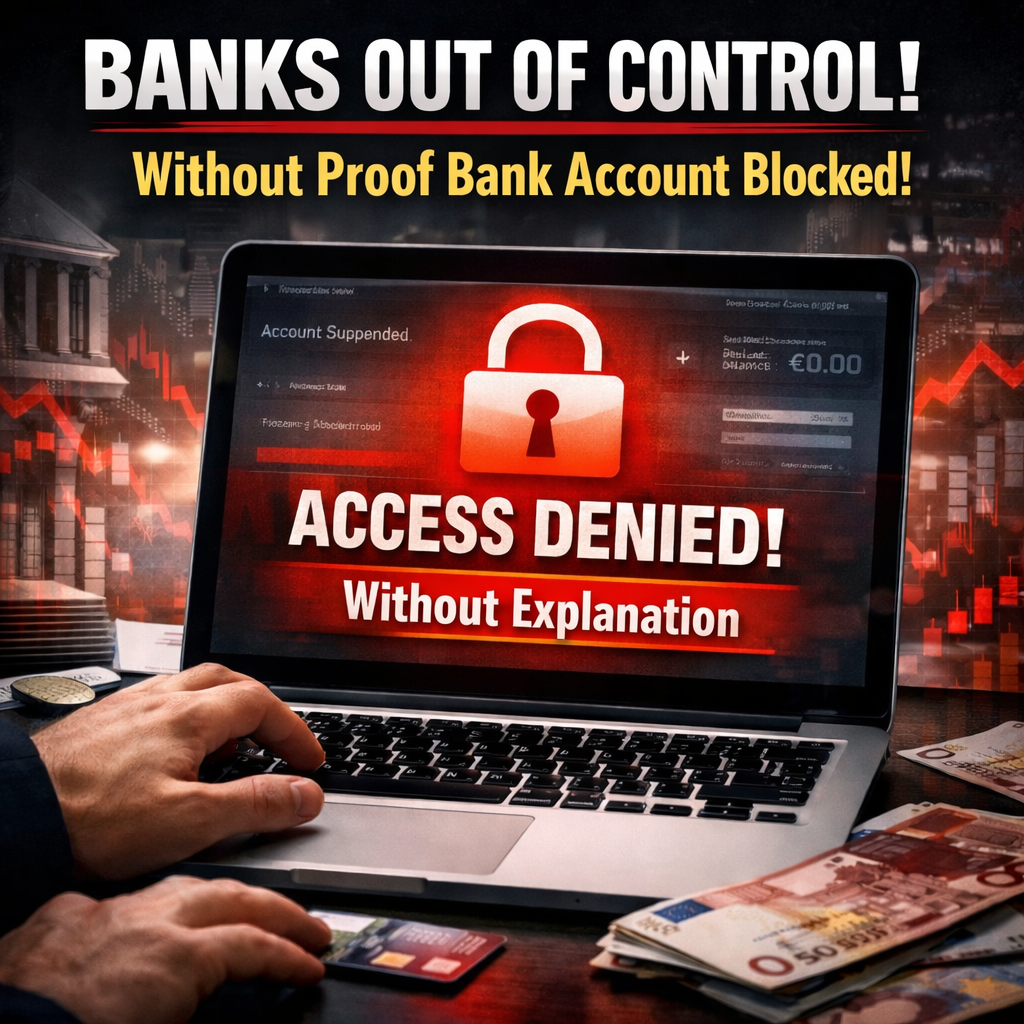
Banks out of control – increasingly de-banking!
It’s not the behavior that matters – but the structure.
How de-banking becomes a systemic risk for international companies
Bank account blocked.
No warning. No specific reason given.
What initially appears to many to be an isolated case, upon closer inspection reveals itself to be part of a larger pattern.
Companies in cross-border business are increasingly reporting suddenly terminated business relationships – even when all regulatory requirements have been met and there are no verifiable violations.
From individual case to system
Banks were long considered a stable foundation for economic activity.
But this stability is increasingly losing its reliability.
Business relationships are sometimes terminated at short notice today – without a specific accusation, without a comprehensible explanation, often with reference to “internal guidelines” or regulatory requirements.
It is striking that internationally active companies are particularly affected:
- complex payment flows
- several jurisdictions
- networked corporate structures
These factors mean that companies are no longer evaluated individually.
They are classified.
Cross-border companies are not audited – they are classified as a risk.

The new mechanism: risk instead of testing
The real change lies deeper.
Banks are increasingly reducing regulatory risk not through analysis, but through exclusion.
The decision principle is:
“Too complex – too risky – end the business relationship.”
Automated systems and data-driven risk models are playing an increasingly central role in this process.
However, the underlying assessments remain opaque to those affected – as does the specific decision-making logic.
Data protection is often cited as a reason for refusing to provide detailed information.
The result:
decisions are enforced – without any real possibility of verification or immediate resistance.
Pushed out of the market – and then excluded
A structural contradiction within the system is particularly problematic:
Initially, complex business models from traditional banks are excluded – too costly, too sensitive to regulations.
The logical consequence:
companies are switching to FinTech providers.
But that’s exactly where the pattern continues.
The same mechanisms come into play as soon as structures become international, payment flows multifaceted, and business models require explanation:
- Risk classification instead of individual case review
- Automated decisions instead of individual assessment
- Exclusion instead of clarification
The result is a systemic cycle:
First no bank account – then no stable alternative – and finally complete exclusion.
Case study: Classification as a “fraud risk” without a comprehensible basis
A recent case from practice illustrates the structural problem:
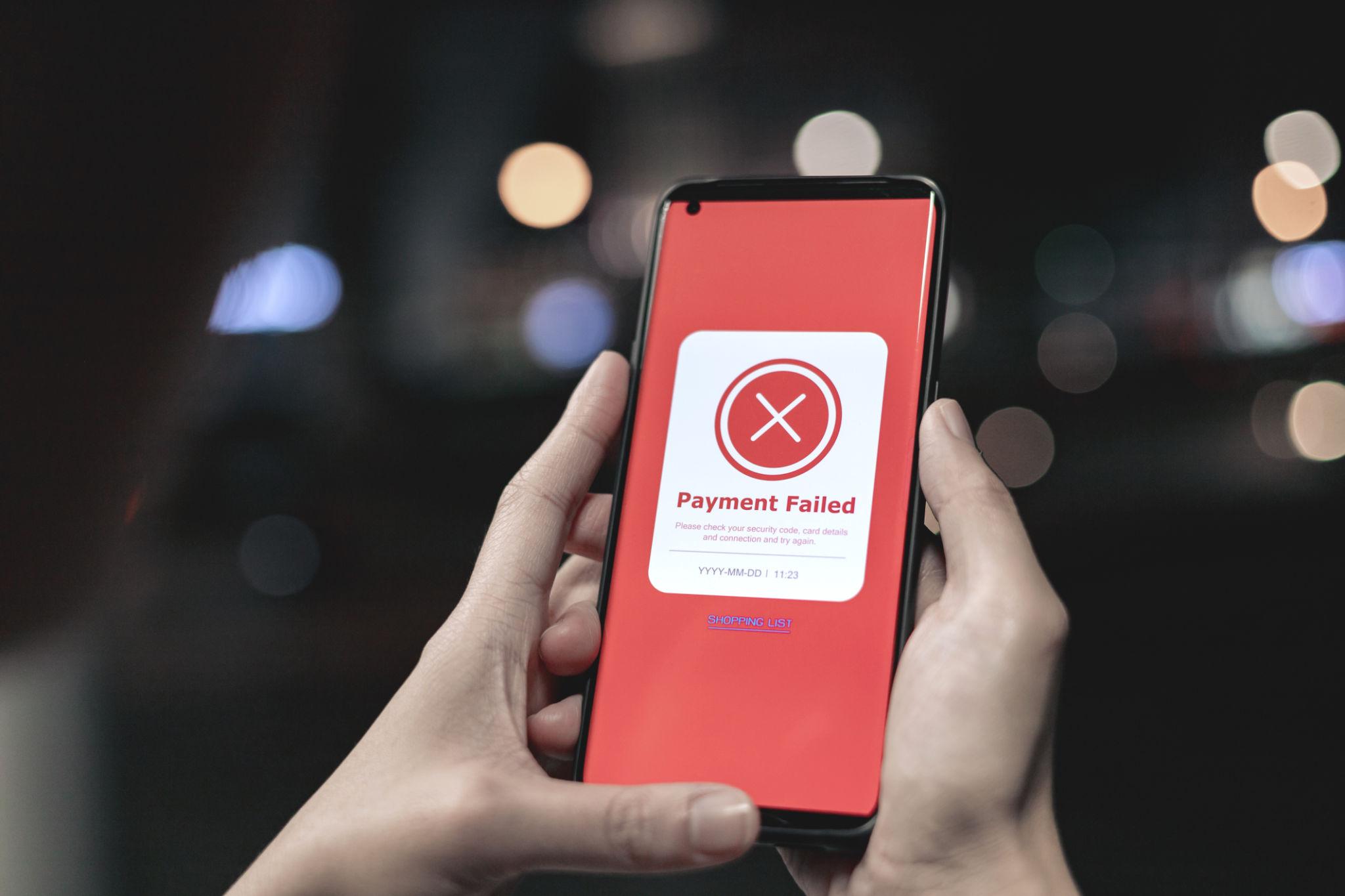
During a planned payment, an international company was classified by a financial institution as “potentially high-risk” or suspected of fraud.
As a result, the transaction was rejected.
No specific reason for this assessment was disclosed.
It is noteworthy that previously comparable payments via other bank accounts – including a business account with a major US bank – were processed without objection.
When asked, it remained unclear:
- on what basis was the classification made
- whether external data sources or internal models were used
- and whether this assessment was communicated to third parties
From a legal perspective, this process is relevant:
A classification as “potentially fraudulent” constitutes processing of personal data with significant impact.
According to the General Data Protection Regulation (GDPR), such an assessment is subject in particular to the requirements of:
- Accuracy (Art. 5 GDPR)
- Transparency (Art. 12 GDPR)
- Right to information (Art. 15 GDPR)
Courts have already clarified in comparable cases that internal risk assessments and classifications may not be withheld categorically by citing trade secrets.
For affected companies, this means: They not only face operational limitations, but also potentially unverifiable valuations that directly affect their economic ability to act.
This case serves as an example: The crucial question is no longer just whether a company complies with the rules – but how it is classified internally.

Practical examples
Companies consistently report similar processes:
- Fully verified accounts will be restricted or closed at short notice.
- Ongoing transactions are blocked
- Credit balances are temporarily unavailable.
- Specific justifications are either not provided or limited to general statements.
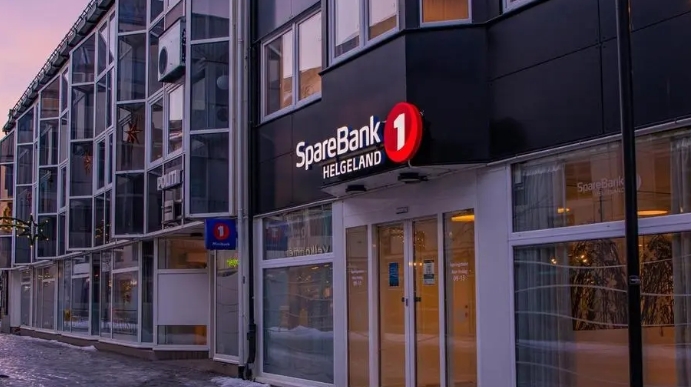
Individual institutions such as WISE or Scandinavian banks such as SEB, KLP or SpareBank1 are repeatedly mentioned in this context – with the decisions in each individual case being based on internal risk assessments.
Conclusion: A system with new rules of the game
De-banking is no longer a fringe phenomenon, but rather an expression of structural change.
For companies, this means:
- Bank access is no longer a reliable factor.
- Liquidity can be withdrawn at short notice.
- Business models are evaluated structurally – not individually.
At the same time, it should be noted:
- Claims may exist
- Procedures can be successful
- But without access to assets, economic success remains uncertain.
The central question has shifted:
It’s no longer just about who is right –
but about who retains access.
Notice
This article presents a journalistic analysis. To the best of its knowledge, it separates facts, assessments, and opinions.
This presentation is based on current developments in the field of de-banking as well as practical experience in an international context. A final legal assessment in individual cases remains reserved.


Leave a Reply
Want to join the discussion?Feel free to contribute!