
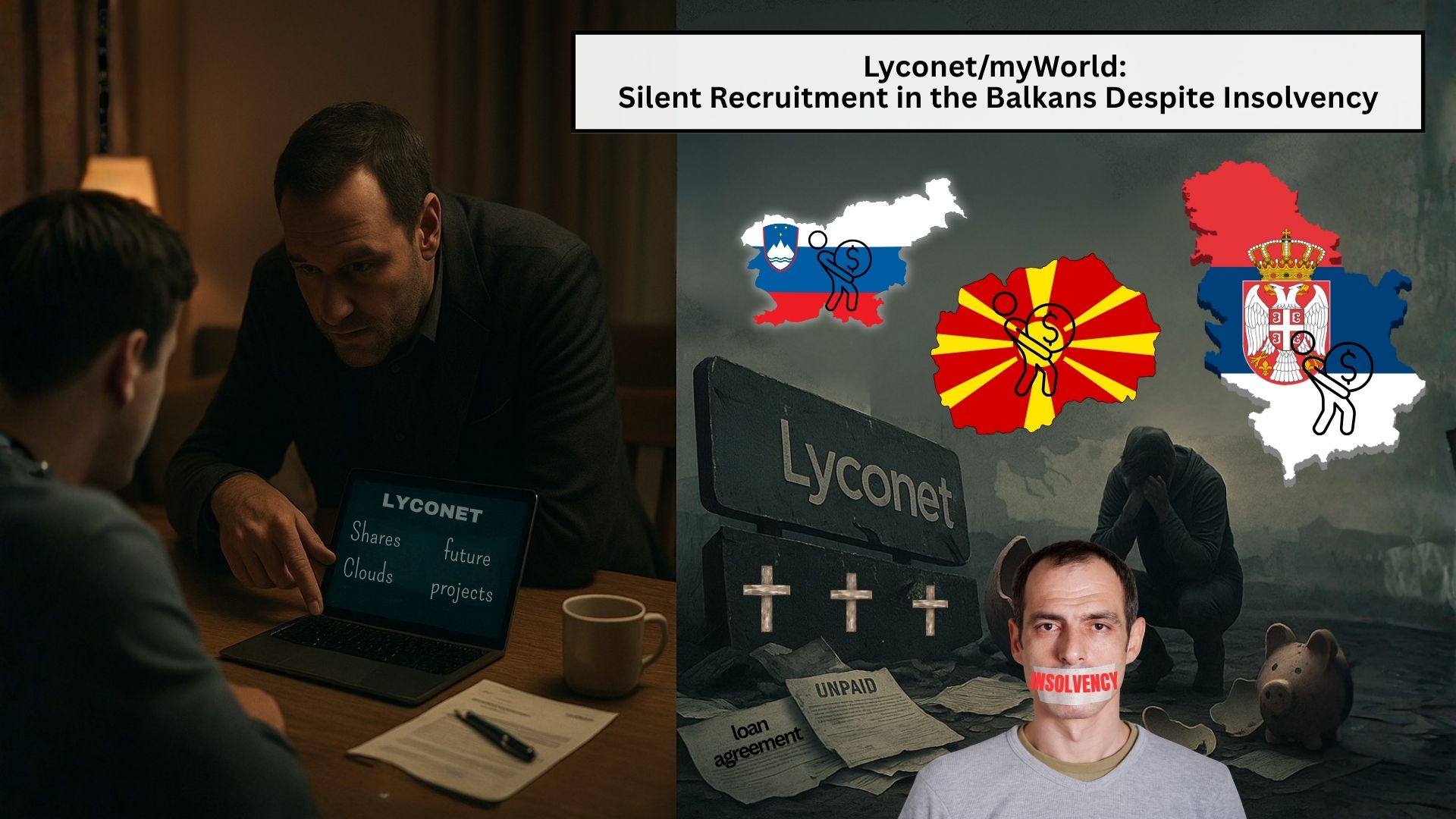
Silent recruitment in the Balkans – Following Slovenia and Macedonia, more and more Serbian marketers are now coming forward
Growing damage following the insolvency of myWorld and Lyconet
Since the insolvency proceedings were opened against myWorld International AG and the associated Lyconet companies at the beginning of August 2025, the damage has been growing significantly.
In addition to numerous reports from Austria, Spain, Italy, Germany and Slovenia, various consumer agencies and media outlets are now receiving an increasing number of reports from Macedonia, Bosnia and Serbia.
The descriptions show an almost identical pattern: local recruitment via trusted individuals, promises of participation in ‘future projects’, repeated changes to the payment terms – and finally the loss of access to one’s own account data after the systems were shut down.
What has long been visible as a mass phenomenon in Slovenia now seems to be spreading to other countries in the Western Balkans. According to the available reports, interested parties in these countries were not approached as traditional sales partners, but as investors in digitisation, cashback or real estate projects.
In practice, however, it was the same system of internal point logic, ‘cloud shares’ and bonus promises that was also used in other markets.
A systematic aftershock throughout the Balkans
According to market observers, the damage across the entire Balkan region is now immense. Particularly serious is the fact that a significant portion of the payments were made between 2022 and 2024 – precisely at the time when myWorld/Lyconet was already losing ground in Central Europe and, according to available documents, was structurally insolvent.
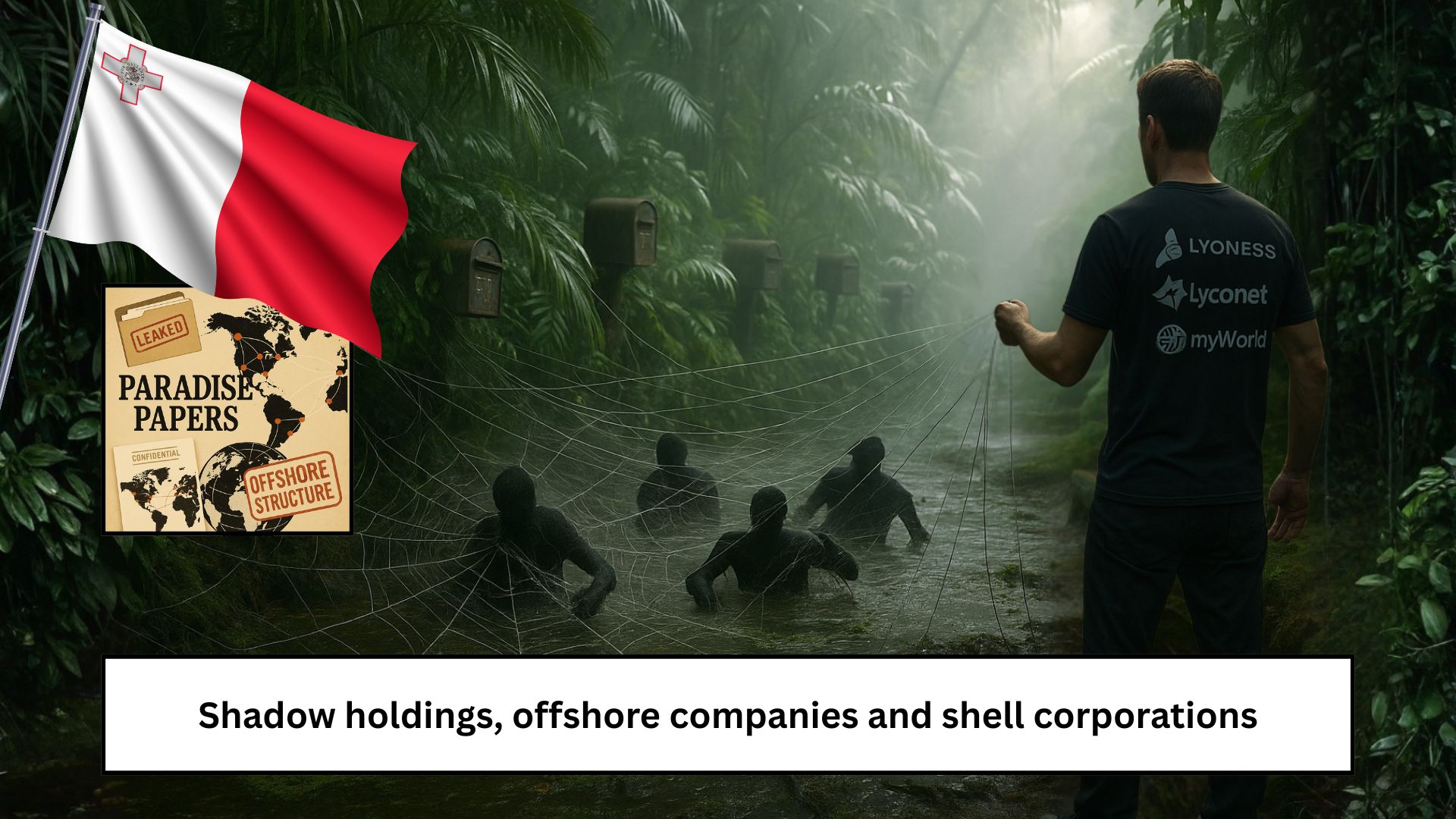
While the first signs of restructuring, renaming and payment difficulties were already becoming apparent in Austria, Germany and Switzerland, the same structures were quietly expanding towards South-Eastern Europe. There, new narratives were used in targeted advertising – such as alleged regional support programmes, investments in ‘future projects in the Balkans’ or the vision of a ‘European cashback network’.
According to current knowledge, this led to one of the late expansion phases of a system that was already economically weakened at its core. From a legal perspective, there are many indications that the development of the Balkan market was not accidental, but strategically motivated:
In countries with less media coverage and language barriers, new depositors could be attracted, while in Western Europe, liquidity problems were already being reported openly.
Slovenia as the starting point – trust, language and lack of transparency
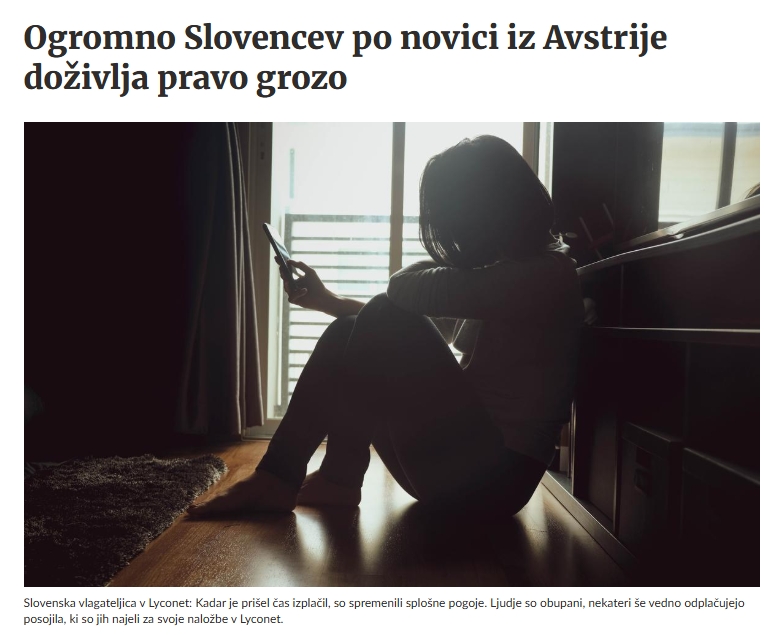
After the insolvency of myWorld International on 4 August 2025 and the insolvency of Lyconet shortly thereafter, numerous victims from Slovenia initially came forward. Many of them report that since the internal systems were shut down, they no longer have access to their accounts, commission histories or supposed investment assets.
All associated websites and the back office were deactivated – those affected were effectively cut off from their own records, unless they had already secured them.
According to the Slovenian news portal Siol.net (October 2025), more than ten thousand people are affected, some with six-figure deposits, partly financed by credit.
As soon as payouts became due, the rules were changed and credit balances were converted into ‘cloud shares’ or alleged ownership shares, for example in a real estate project in Hanover, which later turned out to be a pure marketing ‘fake investment’.
It is particularly striking that Lyconet operated in Slovenia through a close-knit network of local leaders. At least one Slovenian promoter was visibly active in top management and acted as a liaison to the international group of companies at major events. This created the impression that people were investing in real assets, not in a classic network marketing system.
Serbia – same patterns, new dimension
Numerous investors from Serbia are now also coming forward. The processes described are disturbingly similar to the cases from Slovenia:
Promised investments, subsequent changes to the payout conditions, internal points or ‘share systems’ – but no real cash flow back to the depositor.
Prospective investors were not approached as traditional sales partners, but as investors in alleged future projects – with reference to digitalisation, cashback infrastructure or real estate.
They were led to believe that they were participating in a serious international group of companies, not a marketing programme.
Conclusion
The ‘silent recruitment in the Balkans’ reveals a worrying dynamic:
A system that spread through trust, language and local intermediaries deliberately exploited information gaps. While insolvency proceedings were already underway in Central Europe, funds continued to be collected in South-Eastern Europe – often from people who believed they were investing in real projects.
According to current estimates, the financial and social damage throughout the Balkans is immense and occurred at a time when myWorld/Lyconet was already effectively insolvent in other countries.
The number of reports from Serbia, Macedonia and Bosnia has been rising steadily since then – a clear sign that the process of coming to terms with what has happened is only just beginning.
Note:
This publication is a journalistic analysis and initial legal assessment. It does not replace individual legal advice. Those affected should secure all evidence (bank transfers, chat histories, presentations, contract documents) and seek legal advice as soon as possible – especially if payments were financed by credit or if complete documentary evidence is not available.
Sources:
- Siol.net, ‘Slovenski vlagatelji v Lyconet’, October 2025
- Public insolvency documents myWorld International AG, Graz, August 2025
- Media and case reports from Slovenia, Serbia and Macedonia, August–October 2025
- Own research, as of 31 October 2025
Leave a Reply
Want to join the discussion?Feel free to contribute!