
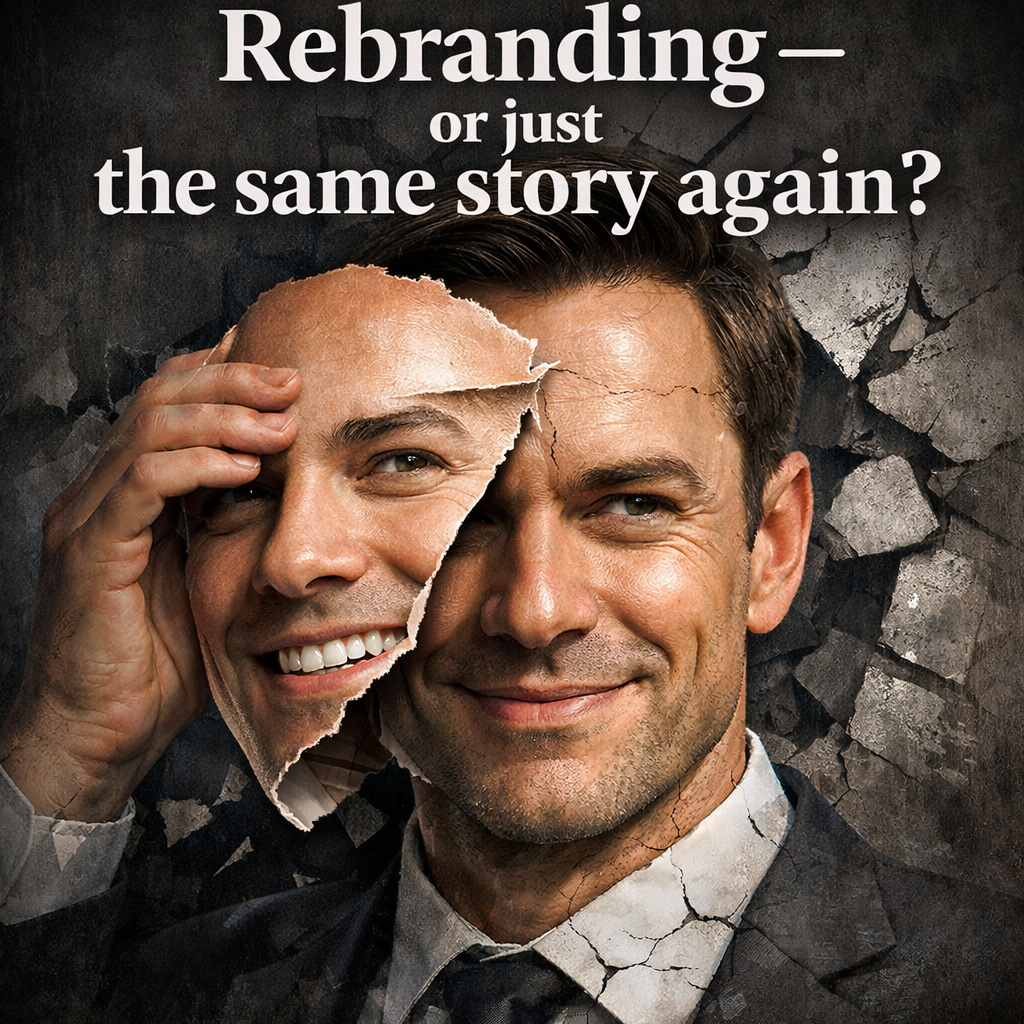
LayerK: Rebranding, Narrative Control & Old Labels in a New Disguise
An “Ecosystem Update” – or a Strategic Reset?

The recently published “Ecosystem Update” by LayerK presents itself as a familiar narrative from Web3 marketing: technological advancement, new structures, increased decentralization, and improved scalability.
However, announcements of this kind tend to follow a well-established pattern. They rarely signal progress alone, but often mark a strategic break with the past—without transparently addressing it.
In the case of LayerK, this context is particularly critical.The project does not exist in isolation but appears to be part of a broader network of predecessor platforms, including Safir, ZENIQ, Xera.Pro / XPRO, and later Homnifi and Connect structures.
What connects these projects is a recurring pattern: ambitious technological promises, aggressive community expansion, and subsequent transformation or rebranding.
The Central Figure: Erwin Dokter – Still Relevant?
The question of whether Erwin Dokter is still actively behind LayerK cannot be conclusively answered through official registry records. However, multiple indicators suggest that he has played a central role historically and operationally—and may continue to exert influence.


In various contexts, he is directly associated with LayerK and related platforms (such as WalleK). At presentations and events surrounding XPRO, he is frequently highlighted as a key figure within the LayerK ecosystem. He previously held leadership roles within the ZENIQ/Safir complex, including executive-level positions in earlier structures.
Even if formal roles are now deliberately more diffuse—a common pattern in DAO and Web3 environments—there are strong indications that Dokter is not merely an external observer but part of the strategic core, or at least was in the past.
Notably, the LayerK update itself avoids clear attribution of individuals. This is a typical characteristic of projects attempting to distance themselves from problematic predecessors without transparently disclosing underlying continuities.
The Bigger Picture: From Safir/ZENIQ to XPRO & Homnifi/LayerK
The real significance lies not in the LayerK document itself, but in the broader ecosystemic context. From an analytical perspective, a recurring pattern becomes apparent: repeated product promises without sustainable delivery.
As early as the ZENIQ phase, hardware products (such as hubs) were marketed whose functionality, according to investor reports, fell significantly short of expectations. Complaints regarding non-functional or undelivered products have been documented. During the transition from ZENIQ to LayerK/LYK, conflicts emerged around token swaps and changes in value structures. Investors report effective “downgrades” of originally communicated promises.
Rebranding also appears as a recurring strategic tool. Each new “innovation” or product launch is framed as the “next generation,” while underlying promoter networks and marketing structures remain largely unchanged.This dynamic aligns with a well-known pattern in the MLM and crypto gray market: when a narrative loses traction, the model itself is not changed—only the name.
LayerK Update: Real Substance or Buzzword Aggregation?
The LayerK update relies heavily on standard Web3 terminology such as “multi-chain,” “decentralized governance,” “EVM compatibility,” and “launchpad / DEX / ecosystem.” The issue is that these terms are not differentiating—they are industry standard. Across multiple comparable crypto-MLM cases, it has been observed that such buzzwords are frequently used to simulate technological substance, while actual functionality remains limited.
The critical question, therefore, is: What does LayerK concretely deliver that is not already better addressed by established blockchains such as Ethereum or Solana? The update does not provide a clear answer. Instead, it shifts the focus toward vision, structure, and future potential.
LayerK, XPRO, Connect – and the Distribution Machine

A key and often underestimated factor is the underlying distribution architecture. XPRO is positioned as a referral marketing agency. Connect and Homnifi act as central hubs for aggregating products and capital flows. Within this structure, LayerK appears less as a standalone product and more as an infrastructural narrative.
This implies that economic success depends less on technological adoption and more on community building, incentivization mechanisms (tokens, rewards), and continuous recruitment.
At the same time, critical information – particularly regarding risks, revenue sources, and long-term sustainability – is not communicated transparently. This creates a situation in which users are required to make decisions based on incomplete information, while responsibility is simultaneously shifted entirely onto them.
The “Ecosystem Update” appears less like a technological milestone and more like a narrative realignment within an existing network. Structural continuities are clearly visible. Technological differentiation, however, remains unclear—and, above all, unproven.
Note:
This article is a journalistic analysis. It is based on publicly available sources. It is not a legal assessment or financial advice. All assessments have been researched to the best of our knowledge and are marked as opinions within the meaning of Art. 10 ECHR / Art. 5 GG. Counterstatements will be taken into account in accordance with § 56 RStV.
Sources:
- Publicly available profiles of the referenced projects (including Youtube & Telegram channels/ groups); research status: March 2026
- Independent editorial analysis of webinars, marketing materials, and investor reports

Leave a Reply
Want to join the discussion?Feel free to contribute!