

Mining Race and Mining Grid: Bitcoin mining or digital pyramid scheme?
From the outside, everything looks modern, efficient and decentralised. But a look behind the shiny surface of Mining Race and Mining Grid raises serious questions: Is this really Bitcoin mining or just another pyramid scheme with a crypto mask?
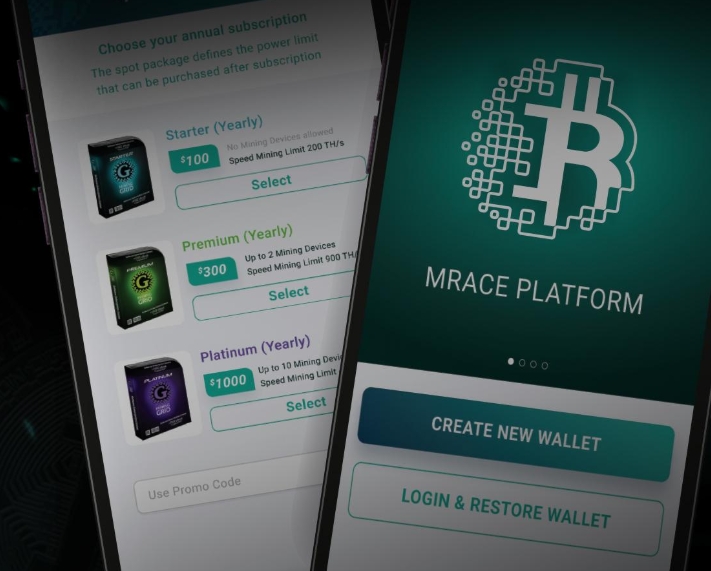
Simple, profitable and secure – that’s how Mining Grid advertises its app, ‘Mining Race’. Users, known as ‘racers’, are supposed to share in the platform’s Bitcoin earnings by purchasing mining cards or licences. However, numerous user reports, cost structures and non-transparent business models paint a very different picture: that of a high-risk, potentially fraudulent system.
Utopian returns, questionable structure
According to official information, investors receive up to 118% returns every 90 days – without any technical effort, simply by participating in the network. The catch: anyone who wants to participate must first pay money. Licence fees of 100 to 1,000 dollars per year are mandatory before further investments in mining cards or hardware shares are possible. This means that the cost structures are more similar to a multi-level marketing system than a classic mining operation.
Critics consider the system to be unsustainable. The platform offers no independently verifiable technical performance, no physically proven mining setup and no audited financial data. Instead, its main purpose seems to be to recruit new participants and pass on their capital. This is a typical characteristic of a Ponzi scheme.
Payout problems and user frustration
Complaints are mounting on social networks and review platforms. Users report losses in the five- to six-figure range. In some cases, additional fees were demanded to allegedly enable payouts or tax exemptions – payouts that then failed to materialise. Other participants describe initial transfers of small profits, but the loss of trust remains high: Who will pay out? Who guarantees the platform’s continued existence?
One participant writes that he received 700 euros but expects the platform to disappear suddenly at any time. Others report that it is impossible to get their money back at all, despite months of efforts.

Security? Regulation? None whatsoever.
The platform also appears vulnerable from a technical standpoint. Although it advertises ‘non-custodial wallets,’ it remains unclear who ultimately has control over the tokens. Critics doubt that users really have full control over their deposits – a classic risk with centralised systems that masquerade as decentralised.
What’s more, Mining Race and Mining Grid are not subject to any regulated supervision. Neither BaFin nor FMA nor any other European financial supervisory authorities have issued a licence. The company structure is based in Dubai, a well-known hotspot for unregulated crypto and MLM projects. There is also no publicly available licence there to date.
A German law firm specialising in crypto fraud openly classifies the system as a scam: investors are highly likely to lose their capital. The recommendation: do not deposit any further funds, secure evidence and consider legal action.
A familiar pattern
The business model follows a familiar script: high return promises, entry barriers through licences, dependence on recruiting new members, lack of transparency in the use of funds – all of this is familiar from previous crypto fraud cases that left thousands of victims worldwide. The fact that key figures behind the platform were already involved in a failed crypto venture also fuels suspicions that this is yet another scam following a familiar pattern.

Conclusion: stay away – until transparency prevails
As long as there is no independent audit of the alleged mining infrastructure, no regulation exists and users continue to report non-payments, Mining Race is not an investment – it is a high-stakes gamble.
Anyone wishing to invest in Bitcoin today has many transparent, regulated and technically sound options. Mining Race is not one of them. Investors should not be blinded by glittering promises and PR videos from Dubai. In the world of cryptocurrencies, one thing is clear: if an offer sounds too good to be true, it usually is.
Note: As always, those affected are welcome to comment, or if anyone has more or different information, they are welcome to share it with us. We are not interested in making false claims, and our primary goal remains to provide complete documentation.
This article is intended solely for information, journalistic analysis and independent opinion-forming within the meaning of Article 5 of the German Basic Law and Section 51 of the German Copyright Act (UrhG) (right to quote). All information is based on publicly available sources, official communications and careful editorial research. Despite the utmost care, we do not assume any liability for the accuracy, completeness or timeliness of the information contained herein.
The mention of companies, persons or projects is based on verifiable research and clearly identified expressions of opinion. Publication is protected by the constitutionally guaranteed freedom of the press. Contributing sources are subject to editorial source protection in accordance with journalistic standards.




Leave a Reply
Want to join the discussion?Feel free to contribute!